
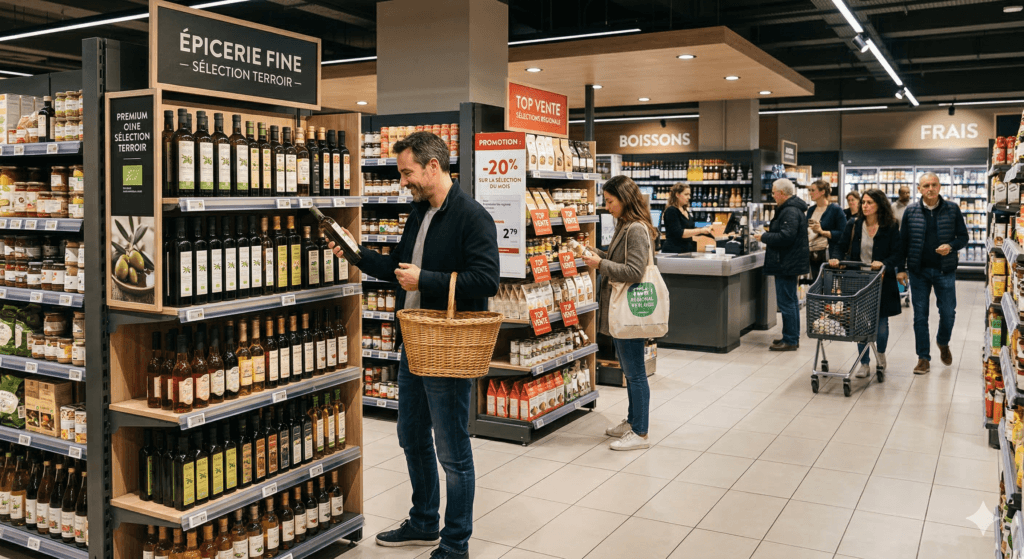
In stores, the decision to buy is often made in a matter of seconds. point-of-sale merchandising is therefore a strategic tool for driving a product’s presence into actual, measurable sales. A haphazard layout or poorly managed shelf space can quickly limit sales performance in-store.
At Distriplus, on-site merchandising is part of a comprehensive strategy for sales deployment,point-of-sale promotion and outsourced sales force.
1. Product placement on the shelves: the foundation of visibility
Product placement on the shelves directly affects in-store visibility and the consumer’s ability to identify the product.
Key subpoints :
- choice of location within the aisle (high-traffic areas / low-traffic areas),
- display height (eye level, impulse zone),
- consistency with competing products,
- compliance with the merchandising plan approved by the retailer.
Effective merchandising promotes in-store sales from the very first days of listing.
2. Shelf and sales floor management
The shelf management aims to optimize available space to improve the visibility of the product range and product turnover.
Key subpoints:
- nombre de facings par référence,
- shelf space optimization based on performance,
- tailoring the product assortment to the type of retail location,
- streamlining underperforming products.
A well-organized shelf layout improves profitability of the department for the retailer.
3. Preventing stockouts in stores
The stock-out management is a major challenge in operational merchandising.
Key subpoints:
- shelf stock control,
- anticipating restocking needs,
- triggering of commands,
- coordination with department managers.
Reducing stockouts helps increase product turnover and prevent revenue losses.
4. Product promotion and in-store displays
The In-store promotion drives sales during peak sales periods.
Key subpoints:
- end caps,
- POS / In-Store Display,
- promotional campaigns,
- launch of new products.
These actions enhance product visibility and supportsales promotion at the point of sale.
5. Field support and point-of-sale coordination
Effective merchandising relies on regular on-site monitoring.
Key subpoints:
- scheduled site visits,
- adjustments based on sales,
- communication with store teams,
- prompt resolution of on-site issues.
Point-of-sale promotions help maintain a sustained commercial presence.
6. The Role of Outsourced Sales Forces in Merchandising
Merchandising is inextricably linked to the field sales force. An An outsourced sales force allows you to:
- implement merchandising recommendations,
- monitor trade agreements,
- collect reliable field data,
- serve as a liaison between the brand and the retailer.
At Distriplus, merchandising is integrated into comprehensive field marketing strategies.
7. Measure merchandising performance
Management relies on sales performance indicators :
- shelf availability rate,
- shelf space,
- sales trends by retail location,
- quality of on-site execution (photos, merchandising audits).
This data enables the continuous optimization of the merchandising strategy.
Merchandising and Sustainable Sales Performance
The merchandising is a sustainable driver of business growth. It helps secure product listings, improve retailer satisfaction, and increase in-store sales over the long term.
Distriplus, an expert in on-site merchandising
Distriplus helps brandsoptimizing their merchandising,in-store promotional activities , and managing field performance.
👉 Would you like to increase the visibility and turnover of your products in-store?